
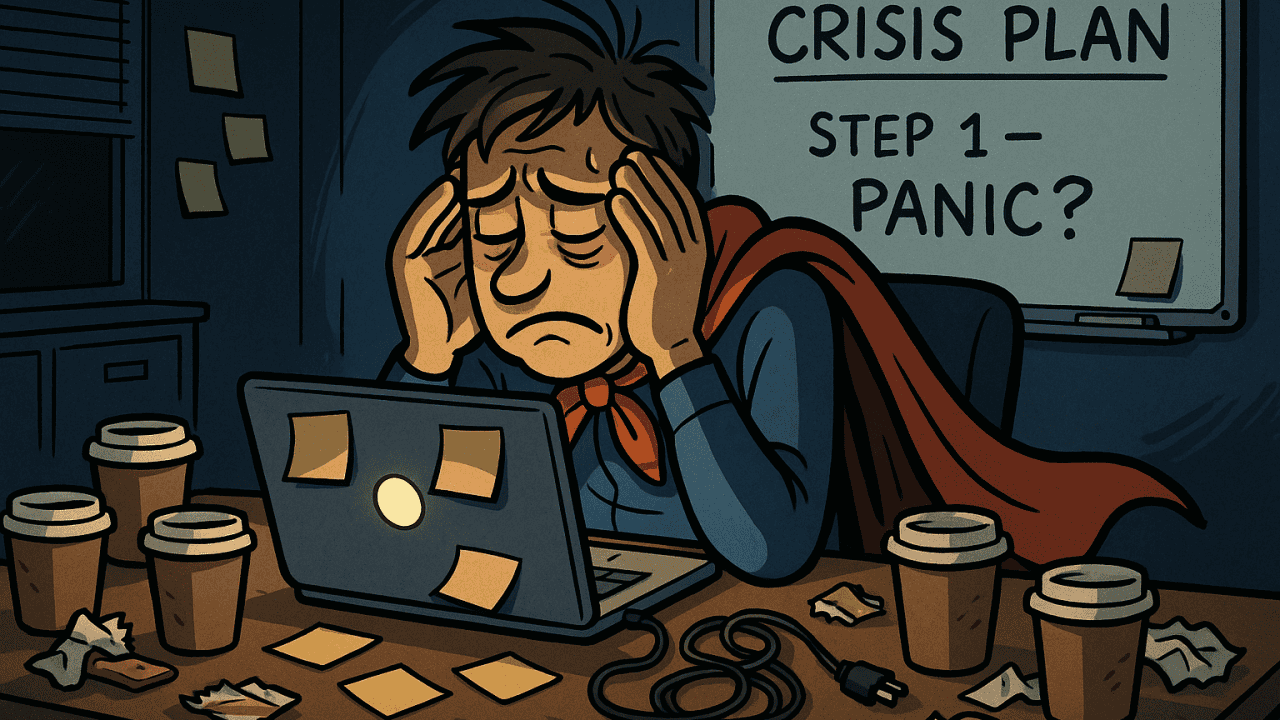
Because spreadsheets don’t get tired, but your crisis team definitely does.
Crisis management isn’t just built on backup generators, cloud platforms, and policy documents thicker than a Sunday roast. It lives and breathes through people, often sleep deprived, under pressure, and running on rubbish vending machine coffee.
In a crisis, we expect leaders to stay calm, make fast decisions, and radiate confidence like a TED Talk speaker on their third espresso. But the truth is, crisis management is messy, emotional, and profoundly human. Let’s explore why managing people, not just plans, is at the heart of crisis response.
1. Fatigue: The Silent Saboteur
The problem:
Fatigue is like a dodgy Wi-Fi connection. You might still function, but everything slows down, you miss key inputs, and no one really knows what’s going on.
What it looks like:
- Snappy emails that read like a hostage note
- Forgetting which Teams call you’re in (or which day it is)
- “Decisions” that get made… then instantly unmade
The fix:
Build shift patterns and rest breaks into your response plans like they actually matter, because they do. A tired Gold Commander is a risky Gold Commander. And no, powering through with a flat white and grit does not count as fatigue management.
2. Leadership in Crisis: Command, Control… and Confused?
The problem:
Some leaders freeze. Others go full Napoleon. Some decide this is the perfect moment to reinvent the comms protocol.
Common traps:
- Micromanaging what sandwiches the Bronze Team should order
- Waiting for all the facts before making any decisions
- Communicating so vaguely that your team assumes the building is on fire
The fix:
Crisis leadership is about direction, not perfection. Train leaders to set clear intent, trust their teams, and avoid the temptation to control every WhatsApp message like it’s a state secret.
3. Decision Making in Chaos
The problem:
Crises don’t come with tidy decision trees or a pause button. More often, it’s “Make a call now, based on partial information, while ten people argue, your inbox melts, and someone’s already drafted a press release… just in case.”
When it goes wrong:
- Analysis paralysis (otherwise known as a three hour meeting to agree on absolutely nothing)
- Waiting for approval from a senior leader who is currently mid-air en route to Tenerife and planning to “dial in when they land”
- Rigidly following a flowchart that looked great in a workshop but has all the practical use of a chocolate teapot during an actual incident
The fix:
Train for ambiguity. Use scenario-based exercises that force teams to make decisions under pressure, with imperfect data. Empower them to act within clear boundaries. And yes, sometimes it’s fine to say “we’re not sure yet”, just not every half hour until the lights go out.
4. The Emotional Toll: Not Just for the Soft Skills Box Ticking
The problem:
Crises are emotional rollercoasters. People get scared, frustrated, or overwhelmed. But because it’s work, we expect them to park all that at the door and just get on with it.
What we see:
- Leaders pretending everything’s fine while quietly panicking
- Teams bottling it up until the “lessons learned” session becomes group therapy
- People burning out long after the headlines have moved on
The fix:
Build emotional intelligence into your response. Debrief honestly. Create space for people to say “that was tough.” And if someone cries in a debrief? That’s not a failure of resilience, it’s a human being being human.
So, How Do We Acknowledge and Address the Human Side of Crisis Management?
How do we make sure our people don’t just survive the crisis, but come out of it without looking like extras from a zombie film?
Prioritize Rest and Recovery
Encourage and model the importance of taking breaks, getting decent sleep, and disconnecting when possible. This isn’t a sign of weakness, it’s a strategic imperative. Think of it as hitting Ctrl+Alt+Delete for your brain. No one’s making good decisions at 3am, least of all someone fueled solely by biscuits and adrenaline.
Foster Open Communication
Create a culture where people can say, “My brain feels like scrambled eggs,” and not get side-eyed for it. Fatigue and stress are part of crisis response, pretending otherwise doesn’t make them go away. Being honest about how we’re doing helps the team stay grounded and more resilient in the long run.
Distribute Leadership and Delegate
You don’t need to carry it all. Empower others to step up. Sharing the load not only builds resilience across the team, it also reduces the number of 7pm crisis calls with someone who’s been “just holding on” all day. Plus, let’s be honest, who doesn’t love being trusted (and maybe having one less meeting)?
Focus on Psychological Safety
Crisis management takes a toll. It’s emotional, not just operational. Building a supportive environment where people can speak up, show vulnerability, and not be judged is key. Think of it as constructing a mental and emotional fort, somewhere safe enough to say, “This is hard,” and get a supportive nod instead of a performance review.
Seek Support
Sometimes you need an external voice, a coach, a peer, a therapist or just someone to remind you it’s OK not to have all the answers. (Or to say, “Mate, just order pizza and regroup in the morning.”) Crisis leadership is a team sport, and the sideline is full of people who want to help if we let them.
Crisis Management Isn’t About Being Superhuman, It’s About Being Sustainably Human
By recognizing that fatigue, pressure, and uncertainty affect us all, we can design systems, teams, and leadership cultures that actually support people, rather than break them.
So, let’s shift the conversation. Let’s put people at the center of our crisis plans, not just in the appendix. Because when we get the human side of crisis management right, everything else follows.
What are your thoughts? How have you seen fatigue impact leadership and decision making during a crisis, and what’s your go-to strategy for battling the brain fog? Reach out to me in LinkedIn and join the discussion.
This article was originally posted on LinkedIn. If you found this interesting, feel free to connect with me there or follow Oakwood Risk & Resilience for more thoughts on resilience, risk, and all things crisis-related. Or visit us at https://oakwoodriskgroup.com/.
###
#OperationalResilience #BusinessContinuity #ResilientWorking #Leadership #CrisisManagement #RiskCulture




Leave A Comment
You must be logged in to post a comment.