
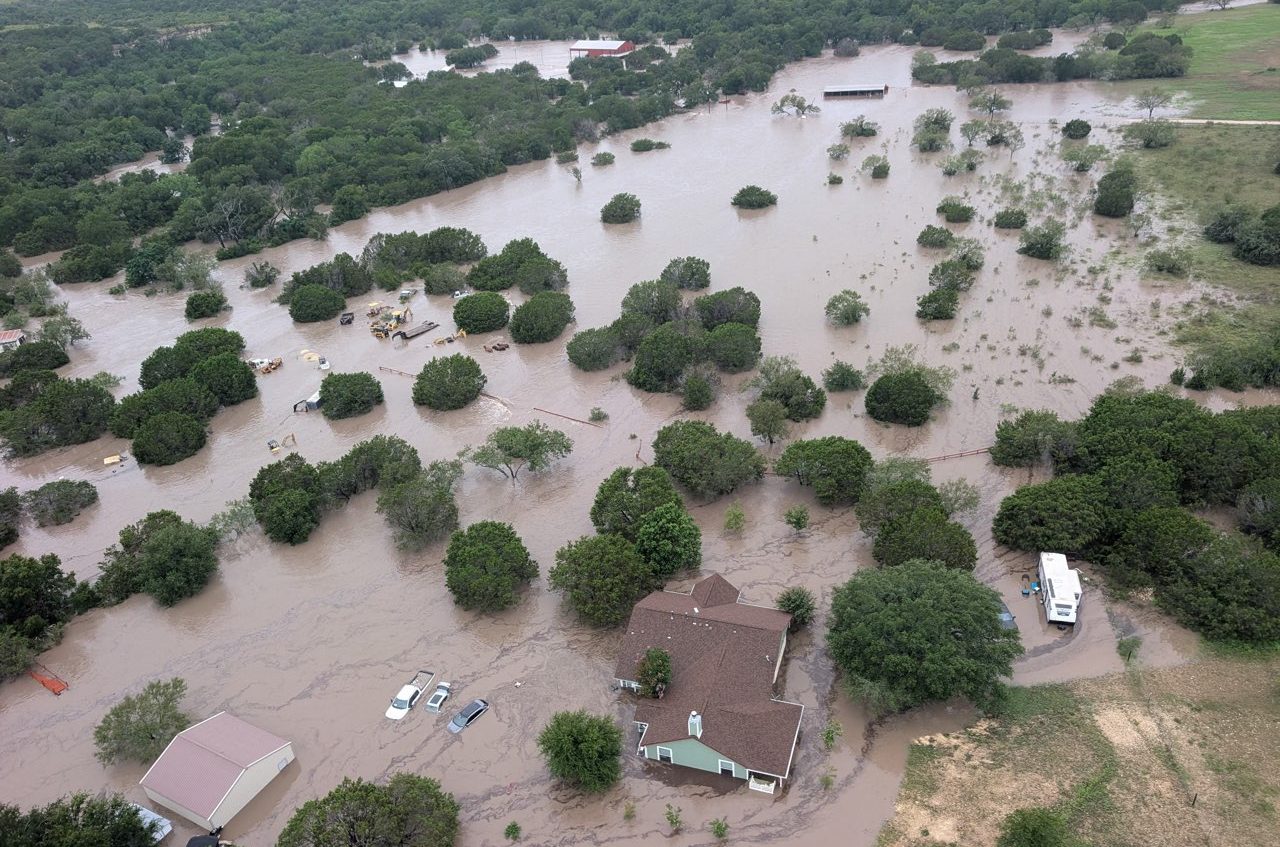
The Texas Hill Country floods left a path of destruction and heartbreak. For emergency managers and public safety professionals, it also brought immense challenges for our colleagues on the ground.
As practitioners, we know better than most the weight of public expectation during a disaster. Even still, our communities of practice take pride in self-evaluating our performance and identifying areas for improvement in the future.
In the age of social media, it was clear after the Kerrville flooding that our industries’ tendency to analyze and openly critique others can be poorly timed. Posts intended to blame and highlight operational deficiencies were anything but constructive and seemed intent on spreading negativity. And all this, amid ongoing search and rescue operations for missing children and adults.
As national attention and news stories transition to social media for “hot takes,” we should feel empowered to capitalize on the audience’s attention and use it for good, rather than tear our colleagues down. Emergency managers, public safety, and continuity professionals should leverage their networks to educate the public on steps they can take to enhance their preparedness.
In the week following the floods, I experimented with my own social media accounts. Targeting messages to the public, I intentionally shared preparedness recommendations as people began to rethink their personal, family, and community safety. The posts quickly gained steam across multiple platforms. Commenters felt the educational posts made them feel inspired to act, which is the outcome we strive to achieve in our preparedness communications.
Message 1: Emergency preparedness is everyone’s job
Yes, it’s true that public safety and emergency preparedness are a government function—but they’re also a shared responsibility between the residents of the communities we serve, the private sector, nonprofit organizations, and the public sector. Residents must be involved, vocal, and active in ensuring preparedness investments are made, maintained, and measured. And they also need to understand they have a significant role to play in their preparedness.
What can people do today to be better prepared for emergencies like those experienced in Texas?
- Enable emergency alerts on their wireless devices.
- Invest in National Oceanic and Atmospheric Administration (NOAA) Weather Radios.
- Build a family plan.
- Vote with preparedness in mind (no, this isn’t a political message).
- Advocate for emergency management and public safety funding.
- Start asking questions.
Message 2: If cell phones don’t receive alerts, Wireless Emergency Alerts (WEAs) don’t matter
On the surface, this message seems crass. However, one of the most basic components of public preparedness is ensuring that emergency alerts are received and acted upon. We need the public to understand that situational awareness is a critical piece of their safety, and education campaigns can have a measurable impact when they emphasize personal responsibility and promote digital alert literacy.
We all know that emergency managers should routinely test their community’s WEA capabilities and ensure residents are educated on how to activate these functions. Similarly, continuity professionals should test and train their workforce on their alerting and warning protocols as well.
But if the audience doesn’t know alerting capabilities exist, or they haven’t activated their phones to receive the alerts—it doesn’t matter how many messages are sent.
Preparedness campaigns must provide instructions on how to activate emergency alerting on cell phones. Sharing step-by-step instructions for iPhones, Android devices, and Samsung users will help your community opt in. When other campaigns remind people to “activate your cell phones for alerts,” providing detailed instructions inspires a different outcome following the flood. After the floods, people commented on these messages that they followed the instructions closely, where they previously didn’t know it was something they had to check manually.
Message 3: Yes, emergency alerts need a backup plan
Wireless alerts and notifications may not always work as intended. They need a backup plan.
Every household should purchase a NOAA Weather Radio, powered by a battery and crank-operated. These radios, which can be purchased for less than $50, provide continuous weather updates, alerts, and notifications—even when there’s a power outage. Despite “weather” being in the name, these radios also provide alerts about significant non-weather events, like terrorist incidents.
A reasonable solution is for every home to have at least two NOAA Weather Radios—one kept near the bedrooms and one in a common area. Additionally, organizations should consider keeping them in high-occupancy workplaces, as well.
Message 4: Emergency preparedness starts at home
Emergency preparedness plans aren’t just for organizations and communities—they start at home. From flooding and wildfires to chemical spills and cyber disruptions, having a family emergency plan ensures faster response, less confusion, and improved overall safety.
Encourage community members to answer key questions in their family plans:
- Where will we go if we must evacuate, and how will we get there?
- Who do we contact that we’ve left, and how?
- How do we reconnect if separated?
- What do we need to bring with us?
Direct them to Ready.gov as a user-friendly resource for building personalized plans.
Message 5: “If it rains, it can flood”
This simple phrase has profound implications: You don’t need to be in a floodplain to experience flooding. No matter where you are, if it rains, it can flood.
In fact, increasingly volatile weather patterns mean flash flooding can happen in places never before considered flood-prone. Emergency managers must incorporate this mindset into community risk communications. Provide visuals and refer the public to Turn Around Don’t Drown campaigns and localized flood preparedness tools like this one.
Brevity is key. Rather than use technical jargon when referring to a “100-year or 500-year flood,” take the guesswork out of it and let your followers know, “If it rains, it can flood.”
Message 6: Don’t just donate—participate in changing the future
In the aftermath of disasters, the impulse to volunteer or donate goods is strong. While monetary donations to vetted organizations are always preferred, the public needs to understand that they can also make a longer-lasting impact by investing in their own community’s readiness.
Emergency alert systems, flood mitigation infrastructure, and operational capabilities all require sustained investment. Some of these initiatives are funded through local ballot measures, which are frequently up for vote during elections—including mid-terms.
This isn’t a political message—it’s a civic one. When public safety initiatives appear on a ballot, they matter. Encourage your networks to be informed voters who understand that saying “yes” to emergency preparedness funding or implementing a public safety project can mean the difference between life and death during the next disaster.
Message 7: Start asking questions
Use moments like the Texas floods to emphasize that public safety depends on informed constituents who advocate for robust preparedness programs.
While voting on a ballot measure can direct funds to a preparedness initiative, the public should have a general understanding of where those funds are coming from. In some cases, it comes from the local tax base, and in others, from federal grants. In many cases, they are only funded by federal grants, which often creates gaps or shortcomings in overall preparedness.
They must start asking questions if they want to ensure their local governments are, in fact, as prepared as they would like them to be:
- Does their jurisdiction have a dedicated emergency management department?
- Is their community leveraging state and federal preparedness grants effectively?
- Have investments been proposed and denied? Why? These are public records—and public dollars.
These questions apply equally to municipalities, school districts, healthcare coalitions, and corporations. When we understand how and why certain investments are made, we can start to ask the right questions to improve our overall resilience.
Changing behavior is the goal
The best way to honor those impacted by a disaster is to do whatever we can to prevent it from happening again. The investments we make now—not just in dollars, but in time, attention, and effort—are what will protect us in the next disaster.
Whether you’re responsible for your organization’s continuity plans or your community’s emergency preparedness, our challenge is to harness the attention and energy brought on by every disaster to make our communities more resilient. Emergency management has been a daily headline on national news networks since the beginning of 2025. We should leverage these platforms to correct the narrative, educate people on resilience, and empower them to advocate for community and organizational preparedness.
####
Photo Credit: Texas Floods 2025, Courtesy of Defense Visual Information Distribution Service (DVIDS) https://www.dvidshub.net/



Leave A Comment
You must be logged in to post a comment.